
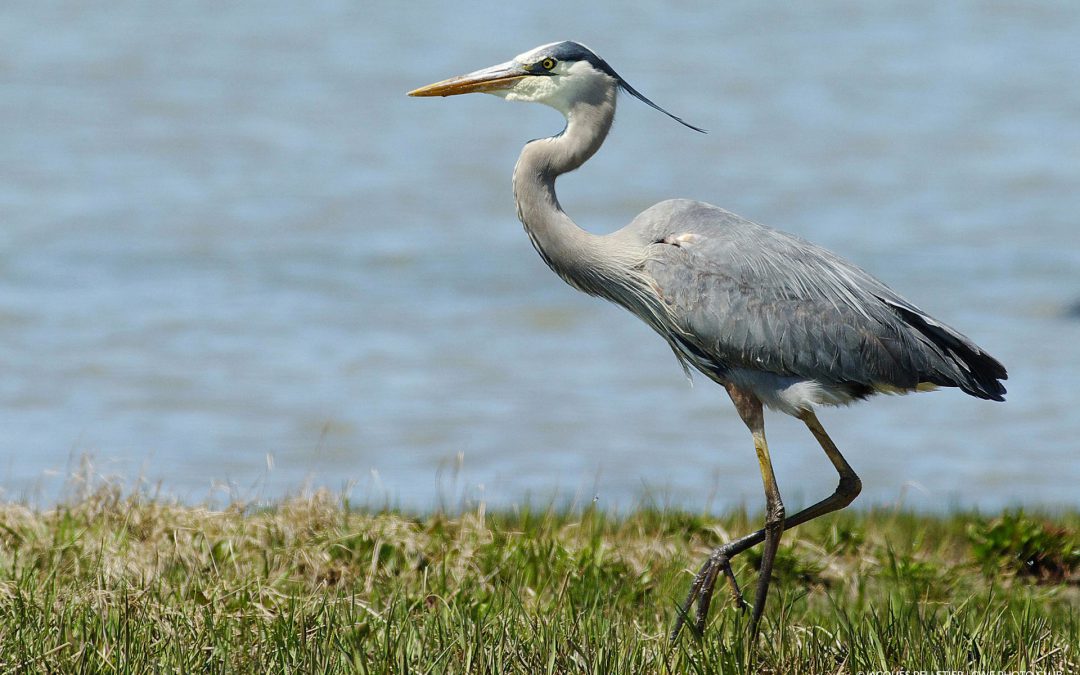
Healthy shorelines are often referred to as the ribbon of life.
They provide important habitat for a wide range of wildlife including fish, insects, amphibians, reptiles, birds and mammals. Let’s look at just a few of the common species that you may find along your shoreline and lake.
Common Loon
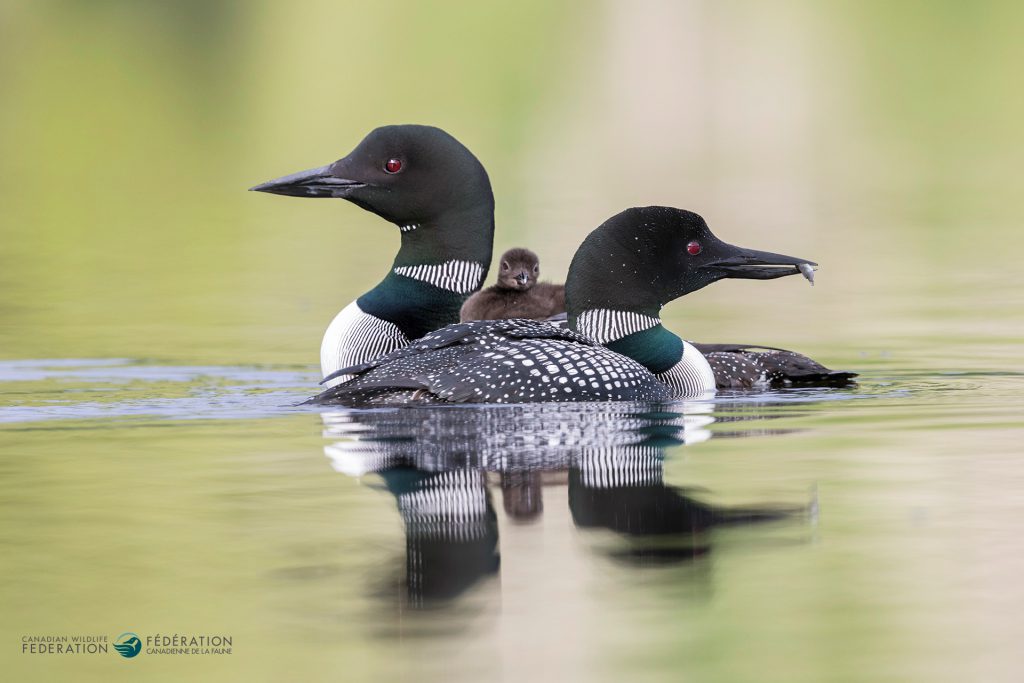
Common Loon parents with their chick.
Common Loons are easily identified by their black head and throat, white neck band, checkered back and black bill. However, it’s their haunting call that may be their most identifying feature. They are indicators of lake health as they depend on clear lakes with plentiful fish populations. Natural shorelines provide nesting areas and predator protection.
Belted Kingfishers
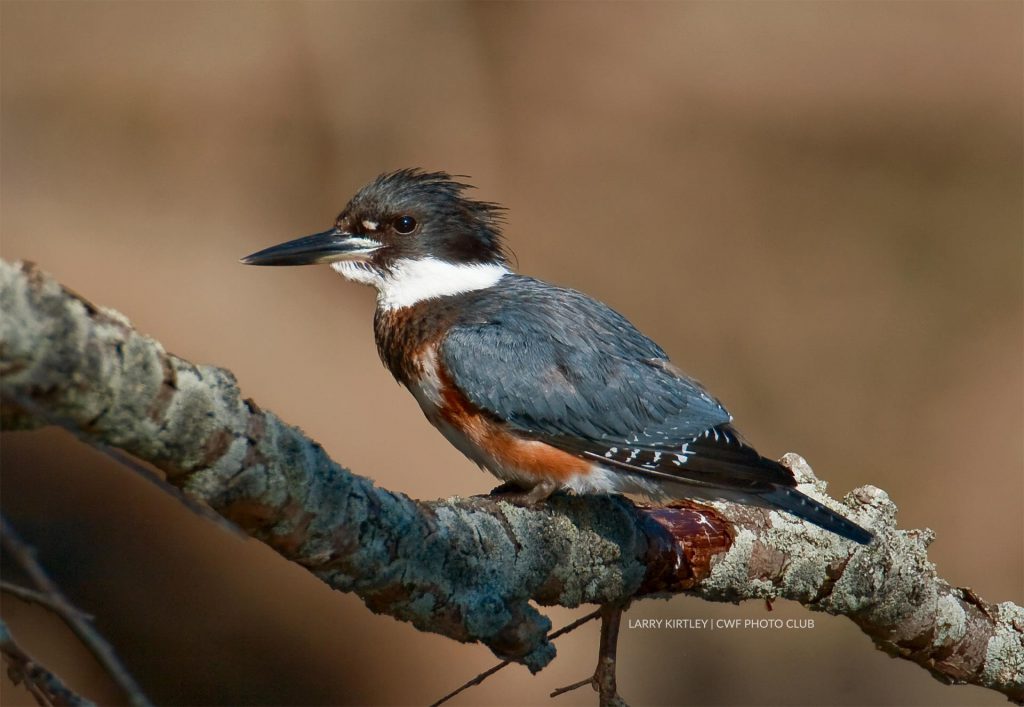
Female Belted Kingfisher ©Larry Kirtley | CWF Photo Club
Once you see a Belted Kingfisher, you probably won’t forget what they look like! Males and females are blue-gray above with white underparts and a blue-gray breast band. Females are a bit more colourful with a rusty-coloured band on their belly. They also rely on a diet of fish, using perches near the water to scan for their prey.
Mink
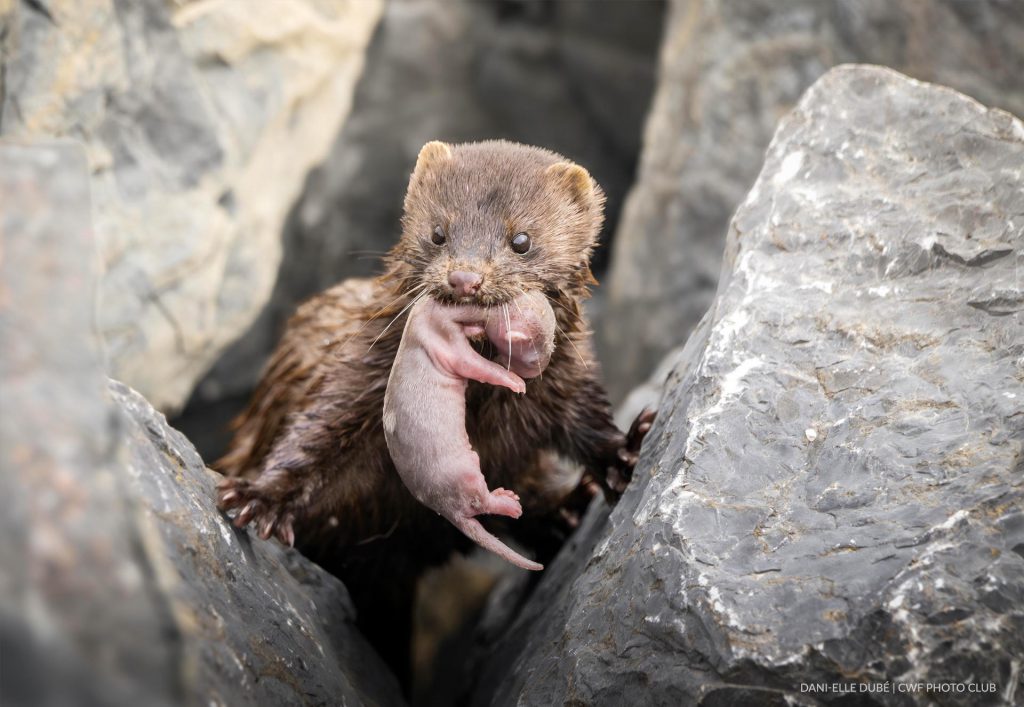
Female American Mink moving her baby @Dani-Elle Dubé | CWF Photo Club
A member of the weasel family, mink have deep brown fur and a characteristic white patch on their chin. Mink hunt along the water’s edge, both on land and in the water, for small mammals, snakes, frogs and fish. They depend on good water quality, shoreline vegetation and lots of prey.
Muskrat
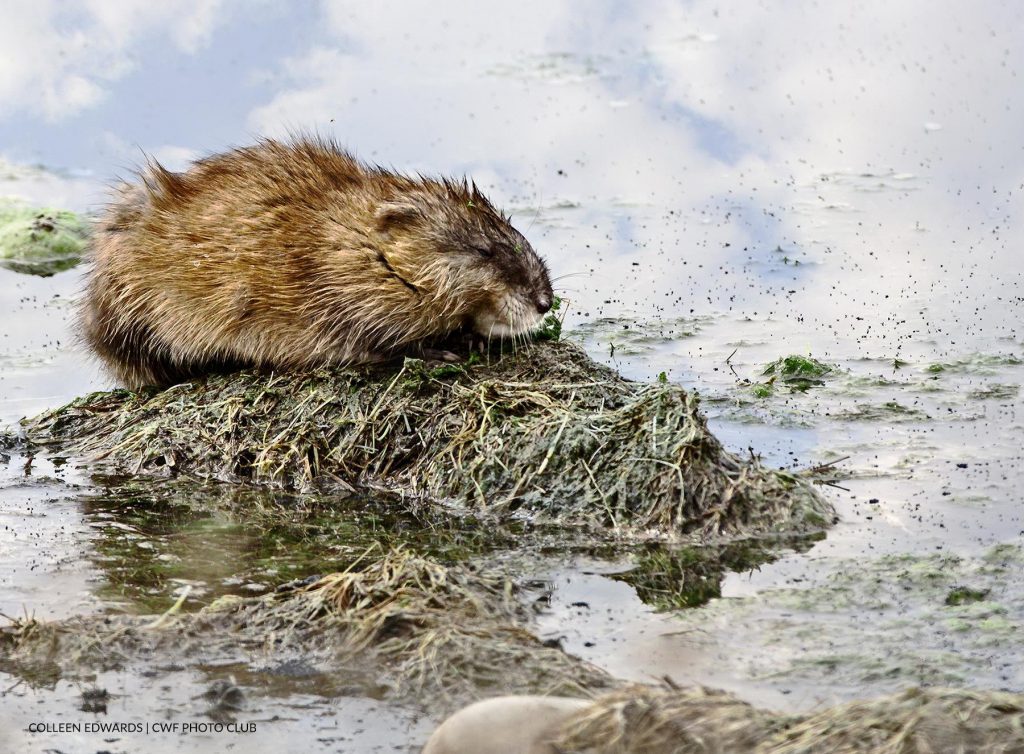
Muskrat at Reed Lake, SK ©Colleen Edwards | CWF Photo Club
Sometimes confused with beavers, muskrats are smaller and have a thinner tail. They live in marshy areas of lakes where the water is deep enough that it doesn’t entirely freeze during winter and has aquatic vegetation like bulrushes and cattails.
Dragonflies
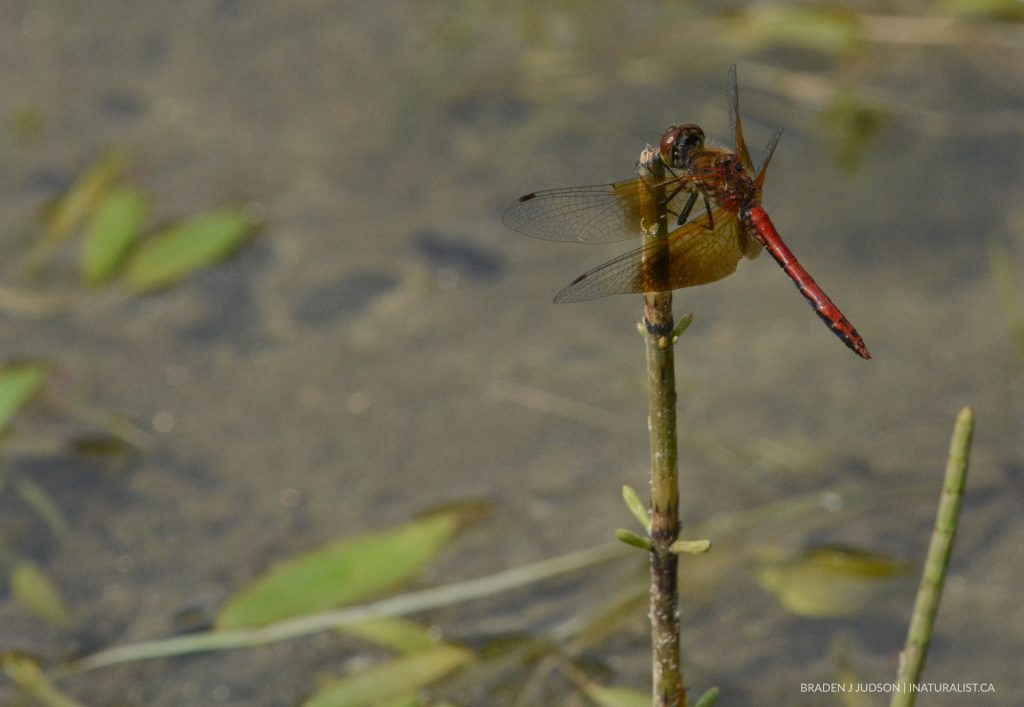
Band-winged Meadowhawk in B.C. ©Braden Judson | iNaturalist.ca
Dragonflies are an important predator of mosquitoes and other aquatic insects. Depending on the species, they lay eggs either in the stalks of emergent vegetation or directly in the water. Emergent vegetation and shoreline vegetation are important for dragonflies as they provide cover from predators, places to crawl up for final emergence and as resting spots. They even use shoreline rocks to warm up in the sun.
Snapping Turtle
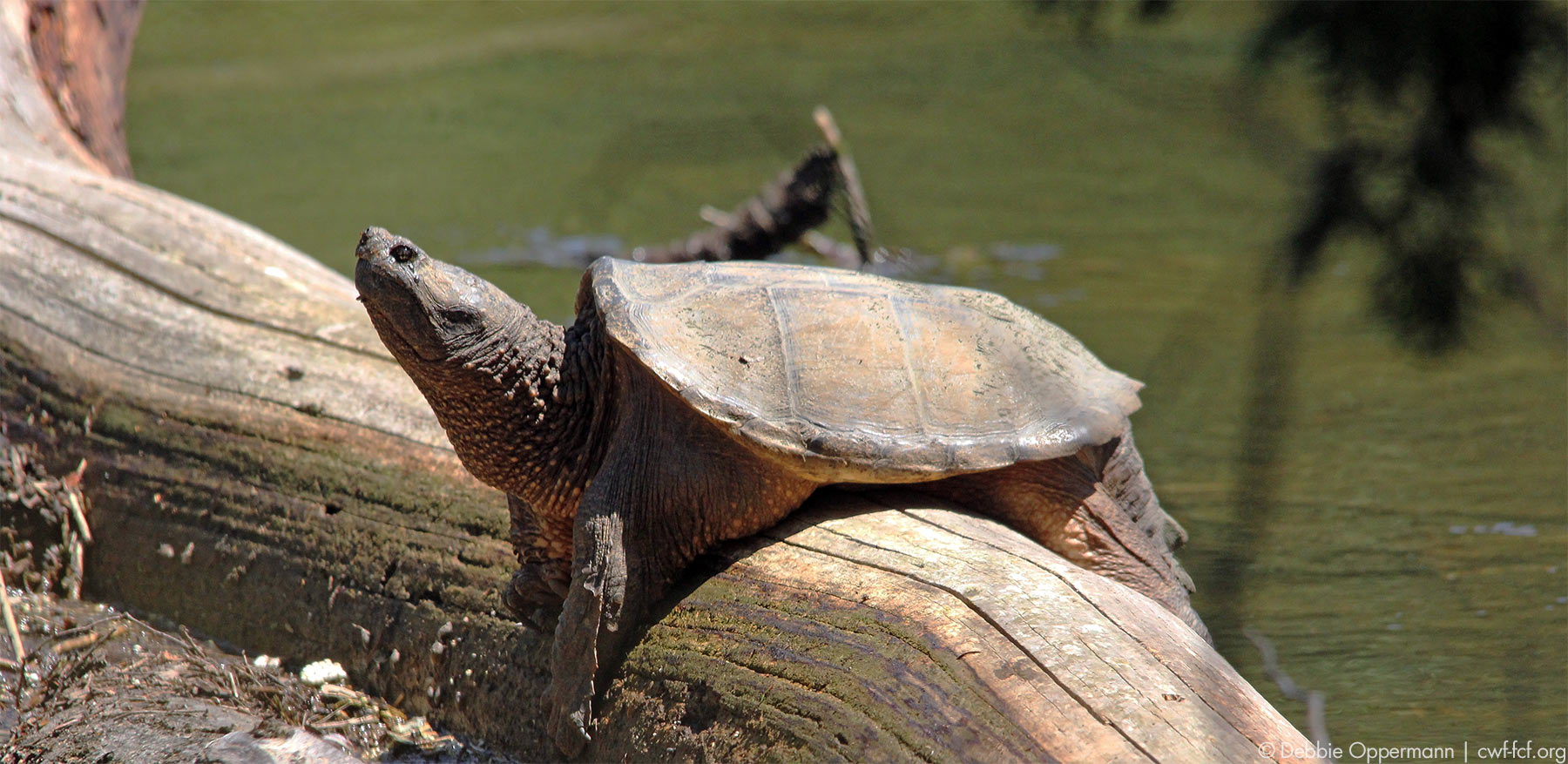
Basking Snapping Turtle ©Debbie Oppermann | CWF Photo Club
Snapping Turtles are Canada’s largest freshwater turtle. They can be found in lakes with lots of vegetation, logs, brush and with a sand or soft mud bottom. Snapping Turtles are quite docile in the water and commonly swim away from people.
Take some time and explore the wildlife along your shoreline! You might be surprised about the diversity of life you find.